TR-90 old-timers
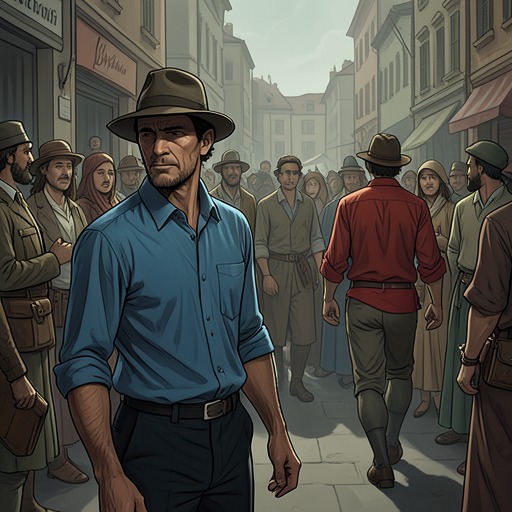
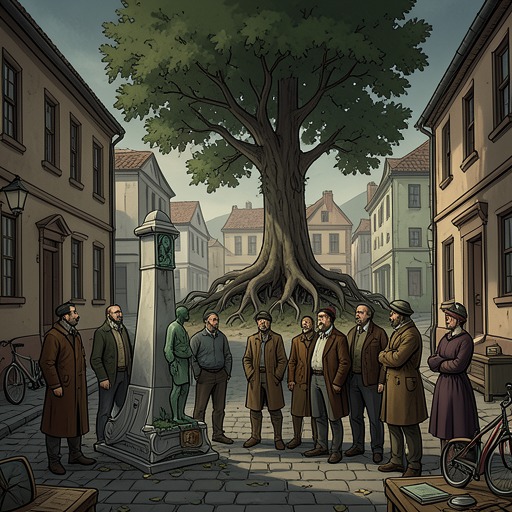
Bag of BonesTR-90 old-timers are the township’s long-established residents, a community bound by shared stories and an unwritten reluctance to expose its own wrongdoing. They act both as keepers of local memory and as participants in its suppression: Jo’s investigation recovers what public histories omit, while the old-timers’ collective presence later becomes part of the psychic force gathered around Sara Laughs and The Street.
Local Memory and Its Keepers
The old-timers’ knowledge is carried through conversation as much as through formal records. Jo began researching the township for an article, initially treating the work as a lark. She read books, but relied chiefly on talking with people about the old days and encouraging them to look for letters and diaries. Frank judged her particularly good at drawing out these accounts. The research remained unknown to Mike, and Frank believed Jo had first kept it secret to preserve a surprise for him.
The contrast between remembered stories and published local history becomes clear in the material Jo left behind. Mike finds photocopied clippings from the Castle Rock Call and its predecessor, the Weekly News, dated in Jo’s firm handwriting. Their oldest item, from 1865, concerns Jared Devore. The papers help Mike understand the generations connected with the later history of Sara and the Red-Tops, but the local newspaper accounts themselves do not disclose what happened when the group left. In the surviving reviews, the band is described in racist, patronizing language even as the notices praise it. The archive preserves evidence, but not an honest or complete account.
Edward Osteen’s privately published Dark Score Days offers another, limited form of township memory. Osteen had lived in the area first as a summer resident and later full-time after retirement; he published the book in 1965 or 1966 after commercial and regional publishers declined it. A local reader dismisses his writing and photographs but acknowledges that he tells stories about the area’s past, including the fires of the 1930s. Osteen also included an old photograph of Sara and the Red-Tops, which he thought had been taken at the Fryeburg Fair in 1900. The photograph and the remembered stories preserve traces that the broader historical record leaves indistinct.
Silence and the Unwritten Past
Jo’s notes expose a division between what the community knew and what its public histories admitted. According to those notes, by the time the Red-Tops played the Castle County Fair, their lakeside community had begun to break apart. The account of that dissolution appears in Jo’s research, not in the town histories. Harassment began around Labor Day, growing steadily more frightening. Son Tidwell resisted leaving because he wanted to learn what had happened to his sister and nephew; he stayed with his blood family in the meadow after others departed for safer or more welcoming places.
Frank describes the social logic behind the silence: the township closed ranks when the Red-Tops needed support. People might not have approved of what Jared and his protégés had done, yet when the situation became serious, the community protected its own. As Frank puts it, people keep their dirty laundry behind closed doors. The old-timers’ ethic thus operates not simply as forgetfulness, but as a form of collective protection that leaves the vulnerable outside its boundaries.
Jo’s recovered material also records the history of exclusion around the group’s religious life. After local churches closed their doors to the Black community, its members held services in a clearing about a mile east of what later became known as Tidwell’s Meadow. A large birch cross stood in the clearing. The boy called Junior often went there to pray or sit quietly, and people in the township knew his routine. Someone exploited that knowledge by concealing a leghold trap along the path he used. The episode makes the consequences of local knowledge painfully concrete: familiarity with a person’s habits could be turned into a means of harm.
The Old-Timers in the Present Crisis
In the present-day story, the old-timers’ role shifts from custodians of suppressed history to an audience drawn into an active supernatural event. During the gathering for Royce Merrill’s funeral, the minister speaks about a long and fruitful life, but the old-timers are listening elsewhere. They follow the unfolding confrontation as people once gathered around the pickle barrel at the Lakeview General Store to listen to prizefights on the radio. The old communal habit of listening persists, though its object has changed from a distant contest to danger close at hand.
The gathering also brings the township’s buried guilt into Mike’s thoughts. He suspects that the phenomena’s epicenter lies on The Street, between Sara Laughs and its drowned reflection. He connects this place to Royce’s murder and wonders whether the force responsible might reach the people assembled for the funeral, drawing on their guilt, memories, and sense of being part of TR. Rather than treating the old-timers as detached observers, the narrative places them within the crisis: their shared past may be among the resources from which it draws.
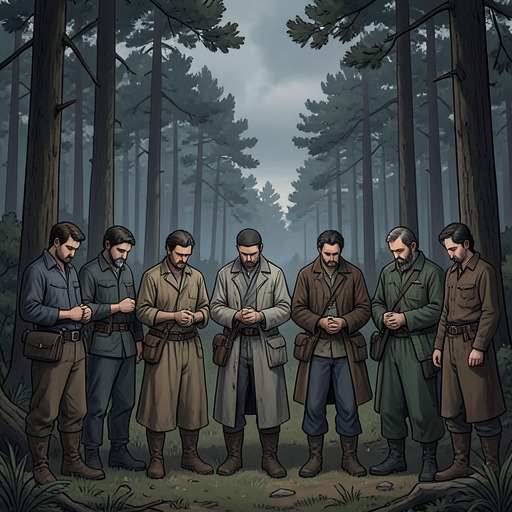
That possibility becomes explicit during the storm. Vehicles gather along the highway near Lane Forty-two, their occupants sitting silently inside. Mike recognizes the old-timers as being in the zone with him and sending in a collective psychic presence. Sara is drawing on them, just as she had drawn on Maxwell Devore and Mike. Mike realizes that some manifestations he experienced after returning to Sara Laughs may have been produced from his own psychic energy; the old-timers’ participation expands that mechanism from an individual experience into a communal one. Their silence is no longer only social concealment: in the zone, it becomes a concentrated, active presence.
Collective Memory and Complicity
The old-timers connect three forms of communal power: oral recollection, public silence, and shared psychic attention. Stories passed from one resident to another keep the township’s past available, while its histories and newspapers omit or distort the experiences of the Red-Tops and the Black community. Jo’s research contests that omission by collecting clippings, photographs, and testimony, but it does not supply a complete account; even the surviving documents bear the marks of the prejudices that shaped them.
The funeral and storm scenes make this history consequential in the present. The old-timers listen together, and later gather together in the zone, but their solidarity carries an unresolved moral weight. The same community that closed ranks against outsiders can furnish a collective force in the struggle around Sara Laughs. The novel therefore presents local memory as neither wholly protective nor wholly trustworthy: it can preserve fragments of the past, conceal responsibility, and, once gathered into a shared presence, help determine what the past is able to do.